What is Chuang Scalp Acupuncture (CSA)?
Chuang Scalp Acupuncture combines segmental anatomy, neurologic topical anatomy and the meridian theory of Chinese medicine. Its point groups, how a treatment is put together, and how it differs from other scalp acupuncture.
Chuang Scalp Acupuncture (CSA) is a scalp acupuncture method developed by two medical doctors in Austria, Dr I-Hsing Chuang and Dr Hedwig Chuang-Quehenberger. It brings together three things: segmental anatomy, neurologic topical anatomy and the meridian theory of Chinese medicine.
Treatment point groups on the scalp
CSA works with groups of treatment points on the head rather than with single points. The authors' books describe these groups:
- Basic points for the spinal segments: cervical, thoracic, lumbar and sacral basic points (C, TH, L and S points)
- Additional basic points
- Cranial nerve points, one for each of the twelve pairs of cranial nerves, each paired with a meridian
- Muscle points
- Autonomic nervous system points
- Brain points
Segments: from a symptom to the spine
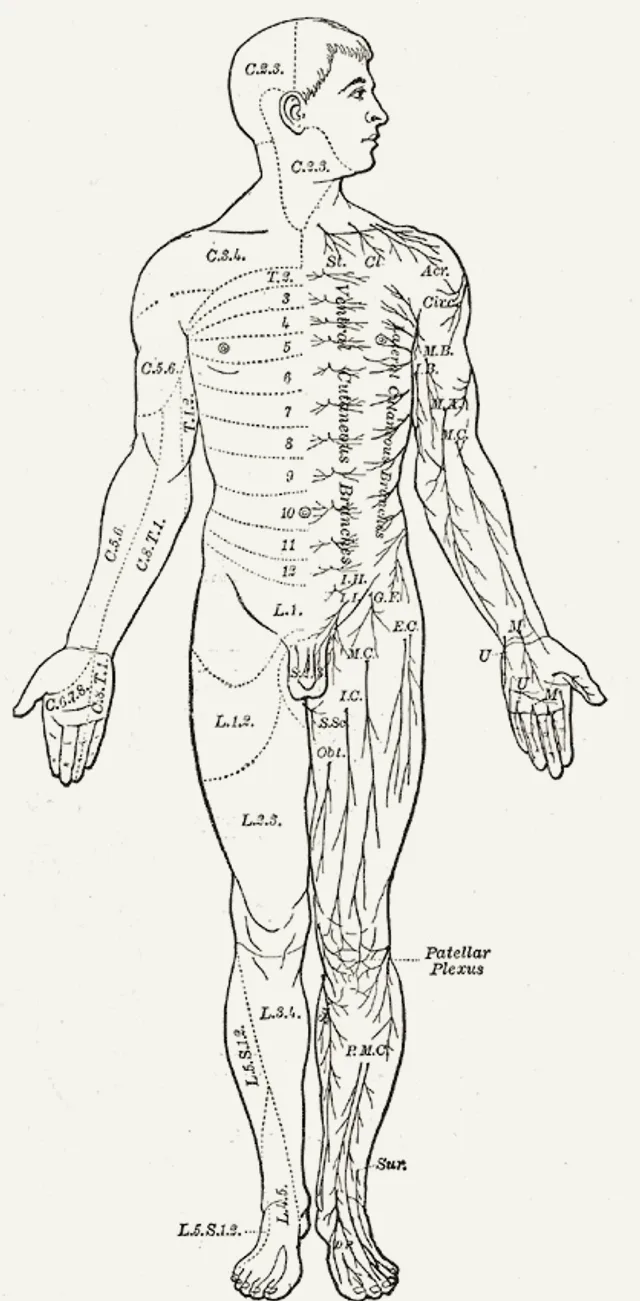
Each spinal nerve supplies its own band of skin (dermatome), muscles (myotome), organs (viscerotome) and bone (sclerotome). CSA uses these maps to trace a symptom on the body or in an organ back to its spinal segment, and treats that segment through its basic point. Because every segment has its own basic point, spinal nerves can be treated one by one.
Cranial nerves and meridians
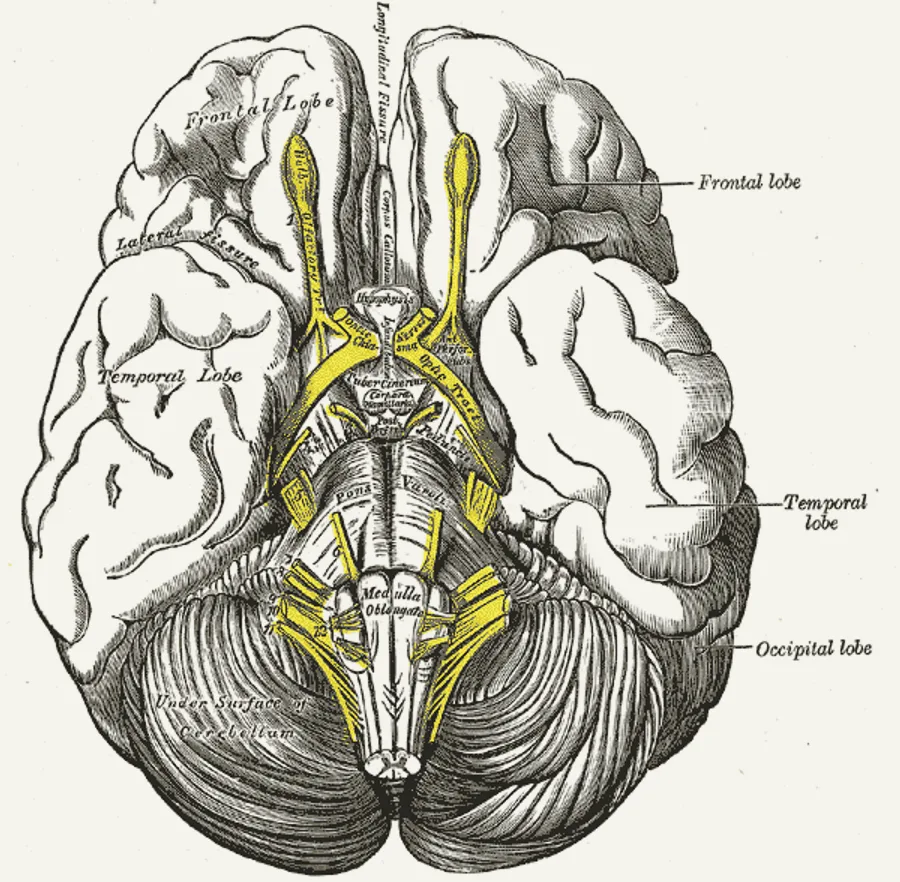
CSA pairs each of the twelve cranial nerves with one of the twelve meridians, for example the optic nerve (CN II) with the bladder meridian (BL) and the oculomotor nerve (CN III) with the pericardium meridian (PC). This lets a practitioner choose points through the meridians they already know and through the nerve involved at the same time.
The autonomic nervous system
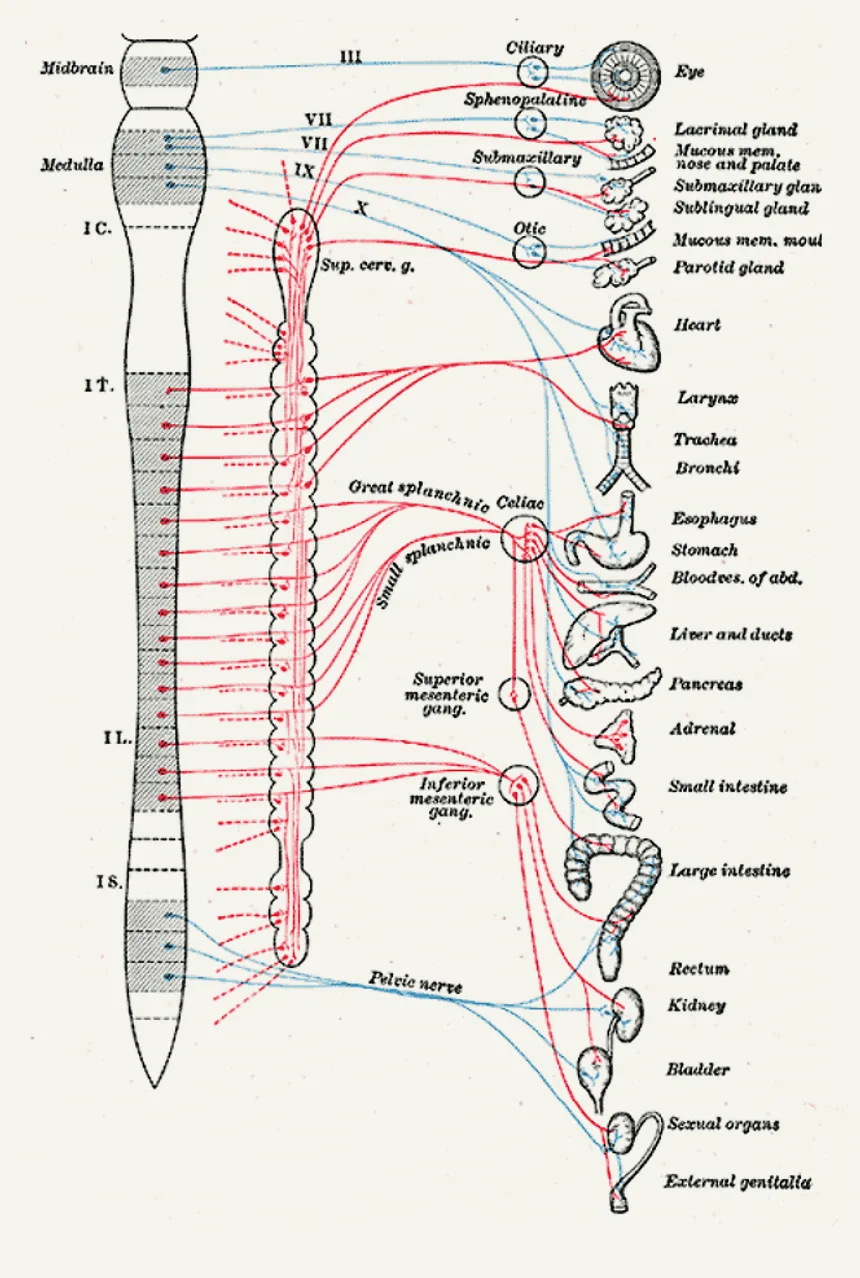
Sympathetic and parasympathetic nerves leave the brainstem and spinal cord at different levels on their way to the organs. CSA has its own points for the autonomic nervous system and uses them where pain or symptoms of the organs involve it.
Putting a treatment together
A CSA prescription follows the patient's condition: the spinal nerves involved, the cranial nerves or meridian pathways, the autonomic nerves and the muscles concerned. Points are chosen by four criteria (history, palpation, symptoms and clinical findings), located by palpation with the fingernail, and checked by the immediate response.
How CSA differs from other scalp acupuncture
Chinese scalp acupuncture (Jiao's scalp acupuncture), systematised by Dr Jiao Shunfa (焦顺发) from 1971, maps areas of the cerebral cortex onto the scalp. Yamamoto New Scalp Acupuncture (YNSA) maps the whole body onto the scalp. CSA grew out of YNSA. Its authors note that cranial nerve and basic point techniques existed before CSA; what CSA adds is a finer differentiation of familiar acupuncture points, newly identified muscle points, and prescriptions built from the nervous system.
Where the authors use it
In their English book the authors describe CSA as especially useful for pain and for neurological conditions such as peripheral facial nerve palsy. They give particular attention to whiplash-associated disorders (WAD), the lasting effects of a whiplash injury, where an unstable cervical spine can sit behind many different symptoms. The clinical chapters of their Chinese book cover conditions including headache, trigeminal neuralgia, tinnitus and stroke, with case studies.
Sources
- Chuang's Scalp Acupuncture: A Concise Overview and Practical Approach (books.com.tw)
- 莊氏頭針精要臨床實踐與應用: contents (cite.com.my)
- Hao & Hao, Review of clinical applications of scalp acupuncture for paralysis (Global Advances in Health and Medicine, 2012)
- Gray's Anatomy (1918), figure 797 (Wikimedia Commons)
- Gray's Anatomy (1918), figure 724 (Wikimedia Commons)
- Gray's Anatomy (1918), figure 839 (Wikimedia Commons)


